


THESSALONIKI
With a population exceeding one million residents, the city of Thessaloniki is one of the largest cities in Southeastern Europe and the second largest economic, industrial, and commercial center in Greece. The local gastronomy has evolved over the centuries alongside the peoples who have lived and developed here, since the region has always been a crossroads of different cultures.
Ingredients of the local gastronomy have always been the fresh ingredients of the land and the sea, all in proximity and blessed by the Mediterranean climate. The world-famous Greek olive oil, dairy products – such as feta, cheese, and yogurt – and retsina are just a few of the quality products that visitors of the city will find.
Thessaloniki has always been a multicultural city that united East and West in lifestyle, tradition, and tastes. Nowhere else in Greece can one find the combination of so many different tastes on the same table. The heritage of the Byzantine and Ottoman Empires are combined with the customs of the Balkans creating the distinct culinary profile of the city. Today, in Thessaloniki all the culinary heritages of the many communities within its walls, among them Italians, Israelis, Turks, Armenians, as well as refugees from Asia Minor and the Pontus, are united.
Culinary map of the city
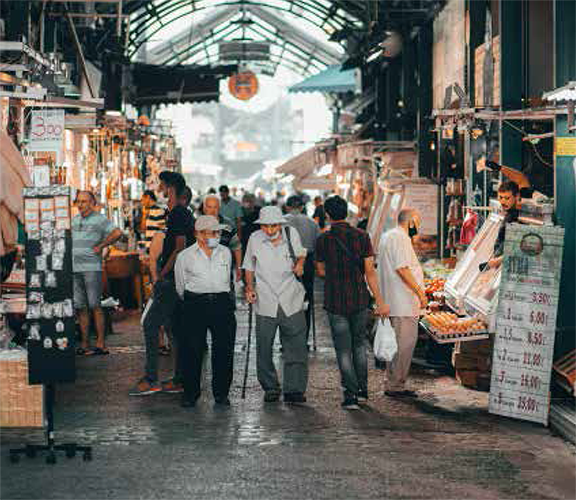
From the beginning of the last century until today, many areas have been favorite haunts of both the Thessalonicans and visitors of the city. The Kapani market has been a center of attraction for visitors for decades now, as there they can find and purchase everything from food to spices, and from herbs to fish. These shops coexist with ouzeries, taverns and cafes that attract people from different nationalities, ages, social classes and cultures. In the past, in small spots of the area, and not only, many rebetes, among them Tsitsanis, started their musical career. Those who loved rebetika music gathered there and enjoyed the sounds of the bouzouki accompanied by snacks and drinks.
Near Kapani, also in the center of the city, the Modiano market until very recently housed food stores, butchers, fishmongers, fruit and vegetable shops, as well as taverns specializing in seafood and meat. It was a point of social gatherings, and especially on Christmas and New Year’s Eve, where the whole city feasted with music, food and drink. Restaurants and taverns, also specializing in seafood and meat, are also found in Louloudika, again in the city center, near these two areas.
A little further south, in the center again, are Ladadika. It is a historical district of Thessaloniki that for centuries was one of the most important commercial centers of the city and is divided into the areas of Ladadika and Ano Ladadika. Today, Ladadika is an entertainment area of Thessaloniki, home to many bars, restaurants and taverns.
Another destination, in the narrow street next to Eleftherias Square, between Venizelos and Ion. Dragoumi, is the pedestrian street of Rogoti. Restaurants have been operating there for many decades and it is a favorite culinary destination of the people of Thessaloniki.
At Athonos Square, near Aristotelous Square, one can enjoy mezedes at noon and in the evening, some days in the company of live Greek music.
North of Aristotelous Street, within walking distance of the Roman Market, is Beit Pazar, home to antique shops where one can find antiques, decorations, appliances, books, etc. of enormous historical and ethnological value. In the evening, however, the scene changes and in the arcades many beautiful taverns serve wine and many mezedes. It is, above all, a favorite haunt of the city’s students, without, however, lacking diversity in the groups that can be found there.
A little further north, one of the most famous districts in the Upper Town is Tsinari, which owes its name to the plane tree (in Turkish tsinar) that used to exist in the area. There, since 1885, the homonymous cafe – ouzeri has been operating, while in recent decades several new restaurants, taverns and cafes have also appeared.
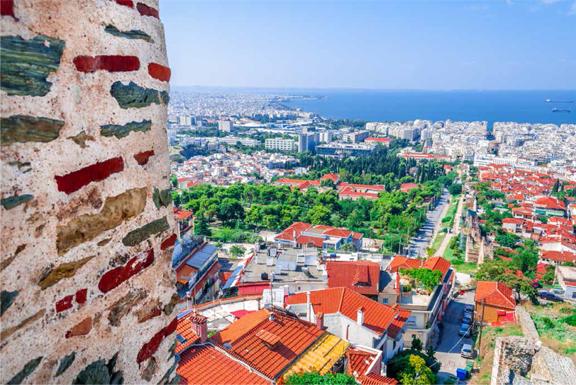
Higher up in the Upper Town, in the Castles, the city visitor can find many taverns and cafes with traditional and more modern tastes.
Taverns and kiosks with tasty snacks are scattered in other corners of the city, some of them also offering a view of the sea. The traditional taverns in Kimonos Voga, the taverns in Karabournaki and those in Peria are some of them. At the same time, areas such as that of the Holy Apostles, the Stock Exchange square, the pedestrian street of Stratigo Kallari and others -inside and outside the urban complex-, are becoming hotbeds of action and experimentation by the city’s new chefs, who try to marry tradition with new culinary trends .
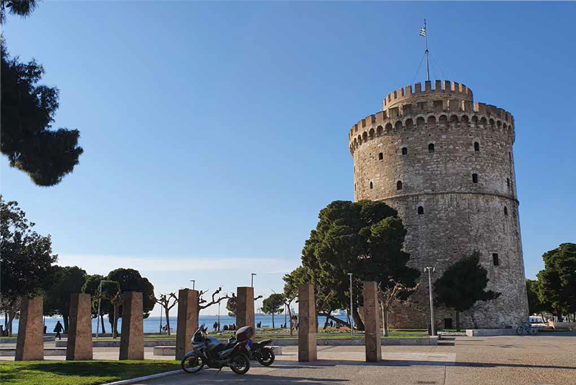
A city like Thessaloniki, which is so closely linked to the sea, could not but host popular hangouts on its beach front. In addition to walking in both the Old and the New Beach, its residents and visitors can enjoy their coffee or food in restaurants and cafes operating in the area.
Gastronomy in Thessaloniki, today
In recent years, the city seems to be trying to redefine its image and charm in order to gain a stronger place on the world map of tourism and gastronomy. At the same time, efforts have been made to highlight the rich historical and cultural heritage of Thessaloniki, with the city often being described as a crossroads of cultures and religions, which gave birth to the narrative of the region’s multicultural past and present.
The people of the city know that gastronomy plays a crucial role, among other things, in exploiting cultural assets, supporting innovation, strengthening the city’s identity, opening export markets and expanding business networks. For these reasons, in 2011 the city launched the largest and longest-running culinary festival in Greece, the “Thessaloniki Food Festival”. This annual festival has managed to gain the attention of the international culinary community. It operates throughout the year, collaborating with many different agencies, organizations and communities. The culmination of this philosophy and the overall efforts of the city’s institutions and individuals was that in 2021, Thessaloniki became the first Greek city to join the Creative Cities of Gastronomy Network of the UNESCO organization.
Other festivals are organized in the city that showcase its gastronomy itself. Since 2017, the “Street Food festival” has been held every year. On the other hand, the “Kapani Project”, a 24-hour event with music, theater and street artists aims to attract new people to the city’s historic market.
On the same wavelength are two wine events that promote Greek wine by showing it to thousands of visitors every year. These are the “Northern Wines” and the “Taste Map”.
In recent years, however, there has been a shift towards more familiar tastes in home-cooked food. Parallel, however, was the development of street food, but also of small traditional restaurants, the well-known taverns/taverns.
A common point of reference for all the above favorite haunts of the Thessalonians is Retsina. It is on every table of the group, accompanied by a variety of foods. For this reason, its lovers do not part with it easily and enjoy it accompanied by suitable traditional snacks, music and company. In Thessaloniki, the combination of tasty dishes and retsina continues the tradition of years with a new look. Today, the widespread popularity of retsina has led to the development of new wines that go well with dishes even of haute cuisine.

Local flavors
However, there are not a few dishes that have been associated with Thessaloniki and are its trademark, while those who visit it rush to try them:
Thessaloniki koulouri
They are sold almost everywhere. The sesame bun has been identified with Thessaloniki, as its history begins during the Byzantine Empire and appeared mainly in Constantinople and Thessaloniki. The word koulouri comes from the Byzantine word “kollikion”. This is the favorite snack of the Thessalonicans.
Bougatsa
The original preparation of bougatsa also comes from Byzantium. Bougatsa dominated the Greek area after the Asia Minor Catastrophe, and mainly in Thessaloniki and Serres. It is a pastry with a filling that uses the foil used to make pies or other doughy breads. Cream or cheese is usually used as a filling.
Panorama triangles
The Panorama Triangle is a syrupy sweet. It is believed to have been first created by G. Elenidis, a milkman and confectioner from the Panorama area, and consists of a triangular-shaped pastry cone in which cream is placed.
Tsoureki
Tsoureki is a traditional sweet bread. The word comes from the Turkish çörek, meaning any dough that contains yeast. This is a favorite dessert of the people of Thessaloniki, and not only. It usually has the shape of a braid, but also a coil or a ball. Its basic ingredients are hard flour, fresh yeast, good butter and sugar, while mastic and machete are used for flavoring.
Frappe coffee
It is no coincidence that Thessaloniki is called the “city of the frappe”, as it is not only a favorite habit of its residents, but also its production began here, specifically at the Thessaloniki International Fair (TIF).
Gyros
Gyros is a traditional Greek dish made from pieces of pork or chicken cooked in a special way. It takes its name from the Greek word “gyra” which refers to the meat on the vertical metal spit, where it is passed to cook with the fire on one side. The word gyros came from the name doner kebab, which comes from the Turkish word “dönmek”, meaning “to turn”.
Smyrna souzoukakia
Smyrna souzoukakia is a dish of Greek and Turkish cuisine. It was brought to Thessaloniki by the refugees from Asia Minor and soon became one of the city’s favorite foods.
Fish & Seafood
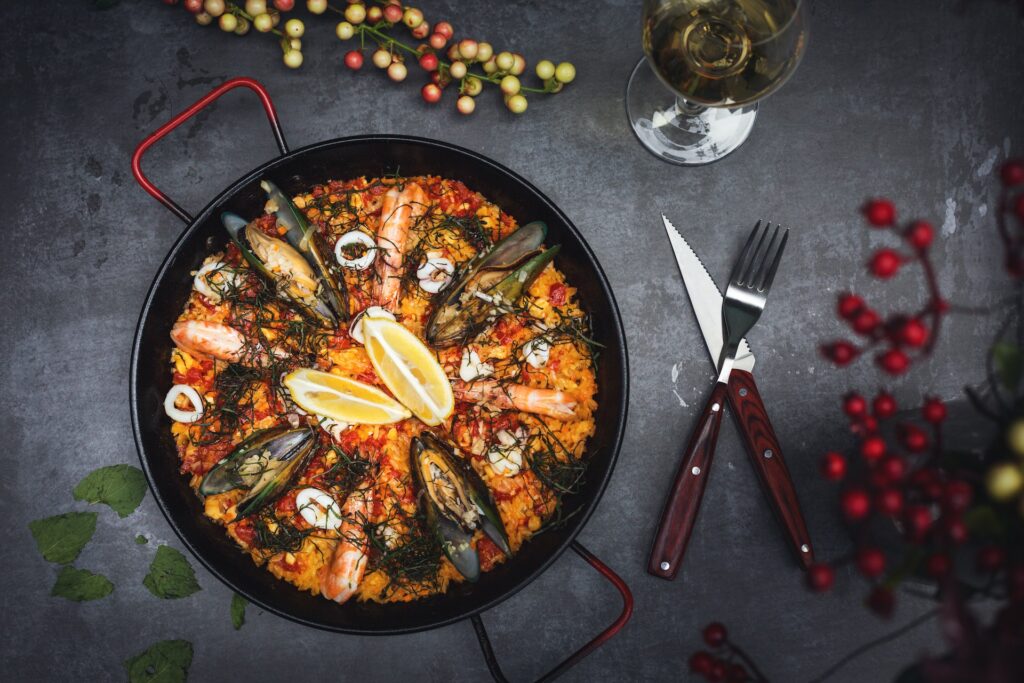
In a city so closely connected to the sea, fish and seafood, which are most often bought at the fish market, just outside the city, are among the most favorite dishes.
Retsina
One of the oldest wines and one of the favorites of the Greeks, retsina has in recent decades become a favorite habit of the people of Thessaloniki. They accompany it either with fish and seafood or with meat, but it always occupies a place at the company table.